How to write your methods
What the methods section must include so someone else could repeat your study.

Academic English: Useful Phrases to Write Better
You do not need a huge vocabulary to write or publish in English. You need to know the phrases and structures that repeat in each section of an article.
| Section | Useful phrases |
|---|---|
| Introduction | “Previous studies have shown that…” “However, little is known about…” “The aim of this study was to…” |
| Methods | “A cross-sectional study was conducted…” “Participants were selected by…” “Data were analysed using…” |
| Results | “As shown in Table 1…” “There was a significant increase in…” “No significant differences were found…” |
| Discussion | “These findings are consistent with…” “One possible explanation is that…” “A limitation of this study is…” |
The University of Manchester’s Academic Phrasebank gathers many more, organised by function. It is free and a great help.
Swales and Feak (2012) advise making your claims with just the right strength. Use suggest, may or appear to when your data do not allow you to say prove. Replace informal verbs: get with obtain and show with demonstrate where it fits.
Trick: read three articles from the journal you want to publish in and note the phrases that repeat. Each discipline has its own way of writing (Hyland, 2006).
Practise your conversation with our partner Global Conversational English. If you need an abstract or article translated, our academic translation service includes a second reader’s review.
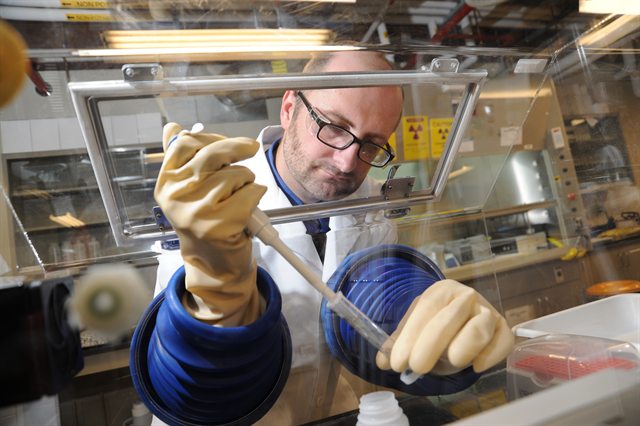
What the methods section must include so someone else could repeat your study.

When to use text, a table or a figure, and how to avoid repeating the same information three times.

The numeric style of the health sciences, with citation and reference examples.
Automatic assistant: it uses the site’s information and Wikipedia. Check important facts. Talk to a person