How to write your methods
What the methods section must include so someone else could repeat your study.
How to Write a Publishable Scientific Article with the IMRaD Structure
Most scientific articles have followed the same structure for decades: introduction, methods, results and discussion (IMRaD). Mastering it is the fastest way from data to publication.
A fifty-year survey of medical publications showed how the IMRaD structure went from an option to the norm (Sollaci & Pereira, 2004). Its advantage is practical: readers know where to find everything, and authors know what to write in each section.
The title should say what was studied, in whom and, if possible, what was found, in fewer than 20 words. The abstract is usually limited to 250 words and mirrors the article: aim, methods, main results with figures and conclusion. Many journals decide at this point whether the manuscript goes to review.
It works like a funnel: it starts from what is known about the topic, points to the gap and ends with the study’s aim or hypothesis. Swales and Feak (2012) describe this move as “creating a research space”. Avoid introductions that run for pages through the whole history of the topic.
Describe the design, population and sample, instruments, procedure, statistical analysis and ethical considerations. The rule is simple: another researcher should be able to replicate your study from what you wrote.
Present what you found, in the same order as your aims, supported by tables and figures that do not repeat the text. Report effect sizes and confidence intervals, not just p-values. Save the interpretation for the discussion.
Gopen and Swan (1990) showed that scientific texts are easier to follow when each sentence puts known information first and new information last, and when subject and verb sit close together. Reading aloud is the simplest test.
Check the journal’s scope, its indexing (Scopus, Web of Science, SciELO), its turnaround times and whether it charges to publish. Be wary of journals that promise publication in days. When the reviewers’ comments arrive, answer point by point, respectfully, and say where you made each change (Day & Gastel, 2016).
At AcademicPro we support the whole process: structuring the manuscript, adapting it to the journal’s guidelines, translating it into English and answering the reviewers.
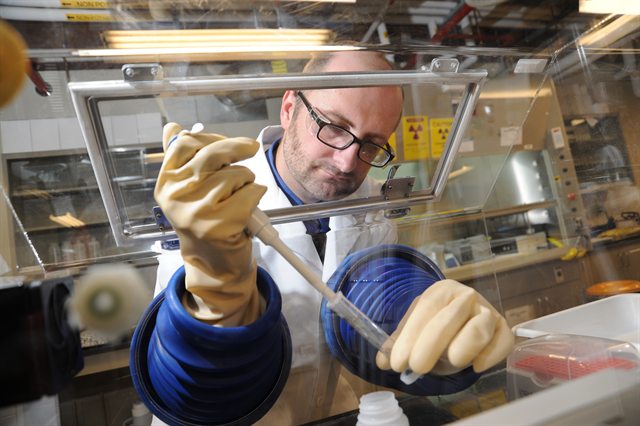
What the methods section must include so someone else could repeat your study.

When to use text, a table or a figure, and how to avoid repeating the same information three times.

The numeric style of the health sciences, with citation and reference examples.
Automatic assistant: it uses the site’s information and Wikipedia. Check important facts. Talk to a person