How to write your methods
What the methods section must include so someone else could repeat your study.

IEEE Style: How to Cite in Engineering
In engineering and computing, the most common style is IEEE. Like Vancouver it uses numbers, but with square brackets and its own order in each reference.
Each source has a number in square brackets, before the punctuation: “as shown in [3]”. They can be combined: “[1], [4]” or a range “[2]–[5]”. The number replaces the author’s name unless you want to mention it.
It follows the order of appearance. The initial comes before the surname.
Article: A. B. Surname and C. D. Surname, “Article title,” Abbrev. Journal, vol. 10, no. 2, pp. 15–20, Mon. year, doi: 10.xxxx.
Book: A. B. Surname, Book Title, 2nd ed. City, Country: Publisher, year.
If you use LaTeX, which is common in engineering, references are handled with BibTeX and the IEEEtran style: just store each source once and cite it with \cite{key}. Numbering and format are generated when you compile.
In Word, use Zotero or the source manager. Before you submit, check that standards, patents and conference papers have the details each source type requires: they fail most often because they do not follow an article’s pattern.
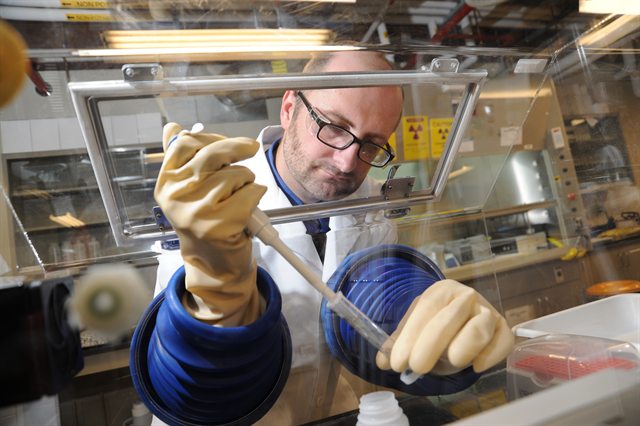
What the methods section must include so someone else could repeat your study.
When to use text, a table or a figure, and how to avoid repeating the same information three times.

The numeric style of the health sciences, with citation and reference examples.
Automatic assistant: it uses the site’s information and Wikipedia. Check important facts. Talk to a person