A global academic service: we work with students from any university in the world
Request a project

Veterinary research: 3Rs and ARRIVE

Veterinary and Animal Science Research: The 3Rs and ARRIVE Guidelines

Veterinary science2 min readBy the AcademicPro team

A poorly designed or poorly reported animal study does not just lose scientific value: it also means using animals without gaining useful knowledge. The 3Rs and ARRIVE guidelines help you avoid that.

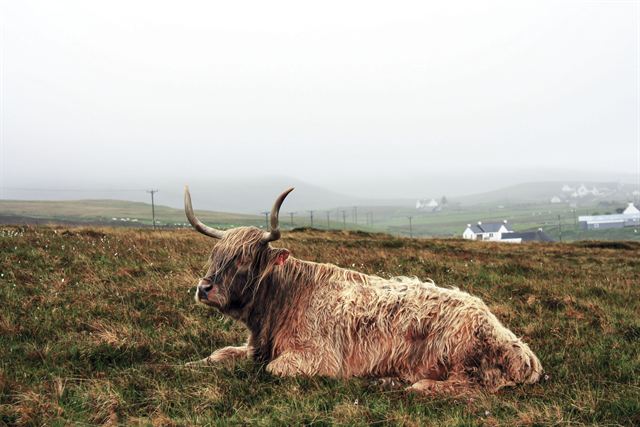
Cattle in a pasture

The 3Rs

Russell and Burch (1959) proposed a framework that still holds:

  • Replacement: use methods without animals whenever possible.
  • Reduction: use the fewest animals that allow a valid answer, which is why sample size matters.
  • Refinement: reduce pain and stress and improve welfare at all times.

The ARRIVE 2.0 guidelines

Percie du Sert et al. (2020) updated this checklist for reporting animal research. Its minimum set, the Essential 10, should appear in every article:

  1. Study design
  2. Sample size
  3. Inclusion and exclusion criteria
  4. Randomisation
  5. Blinding
  6. Outcome measures
  7. Statistical methods
  8. Experimental animals
  9. Experimental procedures
  10. Results

There is also a recommended set with items such as housing, ethics and data availability.

Common mistakes in livestock studies

  • Poorly defined experimental unit: if a whole pen receives the treatment, the unit may be the pen and not each animal.
  • No control group or historical controls that are hard to compare.
  • No randomisation or blinding: this introduces bias, especially in subjective measures such as body condition.
  • Leaving out key data: breed, age, weight, diet, management and dates.

Tip: use the ARRIVE list when you design your study, not just when you write it. Many of its points cannot be fixed afterwards.

Regulations in Colombia

Title V of Resolution 8430 of 1993 covers biomedical research with animals. Law 84 of 1989 sets out the National Animal Protection Statute and Law 1774 of 2016 recognises animals as sentient beings. Ask your university how its ethics or animal use committee works. In other countries, check the equivalent rules.

Keep learning

Our founder is a veterinarian and animal scientist. If you work in this field, visit our partner Veterinaria Online 24/7 or message us to review your protocol. Calculate your study size with the sample size calculator and see arriveguidelines.org.

References

Congreso de Colombia. (1989). Ley 84 de 1989: Estatuto Nacional de Protección de los Animales.
Congreso de Colombia. (2016). Ley 1774 de 2016.
Ministerio de Salud de Colombia. (1993). Resolución 8430 de 1993.
Percie du Sert, N., Hurst, V., Ahluwalia, A., Alam, S., Avey, M. T., Baker, M., Browne, W. J., Clark, A., Cuthill, I. C., Dirnagl, U., Emerson, M., Garner, P., Holgate, S. T., Howells, D. W., Karp, N. A., Lazic, S. E., Lidster, K., MacCallum, C. J., Macleod, M., … Würbel, H. (2020). The ARRIVE guidelines 2.0: Updated guidelines for reporting animal research. PLOS Biology, 18(7), e3000410. https://doi.org/10.1371/journal.pbio.3000410
Russell, W. M. S., & Burch, R. L. (1959). The principles of humane experimental technique. Methuen.

Keep reading

See the whole blog

Animal welfare: five domains

A current way to assess welfare, useful for veterinary and animal science theses.
Livestock field trials

Randomisation, experimental unit and reporting with the REFLECT statement for on-farm studies.

How to write your rationale

Four arguments that convince a committee your study is worth doing, with a structure you can reuse.